Norway is one of the most beautiful countries I’ve traveled through, but it’s also a destination where a little planning can make a huge difference. Distances can be deceiving, the weather changes constantly, rental car logistics can get expensive, and some of the country’s most spectacular roads aren’t open year-round. After traveling extensively around Norway, these are the Norway travel tips I think are genuinely worth knowing before you go.
1. Don’t Underestimate Distances in Norway
Norway may look relatively narrow on a map, but getting between destinations can take much longer than you expect. Mountains and fjords mean roads rarely take the most direct route, and your journey may also involve ferries.
A drive that doesn’t look particularly far on the map can easily take several hours.
When planning your itinerary, always check the actual travel time between destinations rather than judging by distance alone. I also recommend adding extra time to whatever Google Maps tells you because you’ll inevitably want to stop for photos along the way.
2. Check Domestic Flights Before Committing to a Long Drive
This is one of my biggest Norway travel tips! Driving isn’t always the best way to travel between regions in Norway.
Before committing to an eight-hour drive, check domestic flights. Widerøe has an extensive network connecting smaller airports throughout Norway, while SAS and Norwegian also operate domestic routes. Google flights don’t always show these flights so check the Widerøe website directly.
In some cases, flying can actually be both faster and cheaper than driving, particularly once you factor in fuel, ferries, tolls, and rental car costs.
This is especially useful if you’re combining regions that are far apart. Rather than spending an entire day driving, you may be able to take a short flight and rent another car when you arrive. For example it was cheaper and quicker for me to fly between Bergen and Stavanger, so I dropped my rental in Bergen and picked up a new one in Stavanger after flying. It saved me significant time and money.

3. One-Way Rental Cars Can Be Expensive
If you’re planning a road trip, check the one-way rental fee before building your itinerary around picking up a car in one city and returning it in another.
These fees can make an otherwise reasonable rental considerably more expensive.
Before booking, compare the cost of:
- Keeping the same rental car and paying the one-way fee
- Returning the car to its original location
- Flying or taking the train to your next destination and renting another car there
Sometimes the seemingly less convenient option is actually cheaper and quicker. For example it was cheaper and quicker for me to fly between Bergen and Stavanger, so I dropped my rental in Bergen and picked up a new one in Stavanger after flying. It saved me significant time and money.
4. A Rental Car Is Still Worth It for Many Parts of Norway
Despite the previous two tips, I absolutely recommend having a car for certain parts of Norway.
Public transportation works well between many major destinations, but a car gives you much more freedom once you get into the fjords, smaller towns, hiking areas, and scenic routes.
Some of my favorite experiences in Norway came from simply being able to pull over when I saw a beautiful viewpoint, waterfall, beach, or village.
My preference would be to rent cars regionally rather than automatically keeping one for the entire trip.

5. Ferries Are Just Part of Driving in Norway
This one might be the most surprising of these Norway travel tips. If you’re road-tripping through western Norway, don’t be surprised when Google Maps sends you directly onto a ferry.
Car ferries are effectively part of the road network in many areas. On major routes they generally operate frequently enough that you don’t need to build your entire day around them.
However, less frequent ferries are worth checking ahead of time. Missing one can potentially add a significant wait to your journey.
Also remember to factor ferry costs into your road-trip budget. Most of the time the cost is factored into the automatic toll you pay and you don’t need to pay separately. That being said, it’s always good to check.

6. Don’t Forget About Tolls
Norway has plenty of toll roads, bridges, and tunnels, and the costs can add up during a longer road trip.
Most tolls are collected electronically, so you won’t necessarily encounter a toll booth or pay anything when you pass through.
If you’re renting a car, check how the rental company handles tolls and whether it charges an additional administration fee. It’s an easy expense to overlook when you’re calculating how much your Norway road trip will cost.
7. Bring a Credit Card With a PIN
Norway is extremely card-friendly, and I didn’t needed cash while traveling there.
However, I recommend bringing at least one credit card with a PIN and making sure you actually know the PIN before leaving home.
You may encounter unattended payment terminals, particularly at gas stations, that require one. This is something that’s easy for American travelers to overlook because we’re so accustomed to inserting or tapping a credit card without entering a PIN.
I also recommend traveling with a second card as a backup.
8. Consider Shoulder Season to Avoid the Biggest Crowds
If your schedule allows, consider visiting Norway during the shoulder season rather than peak summer.
Late spring and early fall can mean fewer tourists, less crowded hiking trails, and quieter fjord towns. Accommodation may also be easier to find than during the height of summer.
I traveled in late May and early June, and there were places that felt wonderfully peaceful compared with what you can expect during July and August.
However, shoulder season comes with an important trade-off (see below).
9. Check Seasonal Road Closures Before Your Trip
Some of Norway’s most beautiful mountain roads are seasonal.
Snow can keep high mountain passes closed well into spring, while early snowfall can affect them again in fall. Opening dates also vary from year to year depending on conditions.
This is particularly important if you’re traveling in May, early June, late September, or October.
Don’t assume a scenic road will be open simply because Google Maps shows it as part of your route. Check current road conditions while planning and again shortly before you travel.
The same applies to seasonal mountain attractions, hiking access roads, and some public transportation.

10. The Weather Forecast Will Change — Constantly
If you check the forecast a week before your trip and see rain every day, don’t panic.
Norwegian weather changes incredibly quickly, particularly around the fjords and mountains. A day displaying a rain icon doesn’t necessarily mean it will rain continuously from morning until night.
I found forecasts much more useful 24–48 hours ahead than several days in advance.
Check again the night before and morning of any important outdoor activity before making your final decision. yr.no is the best website to check the weather for Norway.
11. Build Flexibility Around Your Most Important Hikes
If there’s a particular hike or viewpoint you’re traveling to Norway specifically to see, don’t give yourself only one opportunity to do it.
Weather can completely change the experience.
Ideally, spend a few nights in areas where hiking is a priority. You can then move activities around depending on which day has the clearest forecast.
This is especially valuable for hikes where reaching the viewpoint is the entire point. Hiking for several hours only to stare into a wall of fog isn’t quite the Norway experience most of us are imagining.
12. Waterproof Clothing Is Non-Negotiable
Norway is not the place to rely on an umbrella.
A waterproof jacket should be near the top of your packing list, particularly if you’re hiking. Waterproof hiking shoes or boots are also worth considering because trails can become muddy and slippery very quickly.
Layers are equally important. Temperatures can change significantly throughout the day and with elevation.
Even if the morning looks beautiful, carry your rain jacket.
See my Norway packing list for more!

13. Research Hikes Beyond Just Distance
A six-mile hike isn’t necessarily easier than an eight-mile hike.
Elevation gain, terrain, exposure, mud, scrambling, chains, and weather conditions can make a relatively short Norwegian hike surprisingly demanding.
Before choosing a hike, check:
- Distance
- Elevation gain
- Estimated hiking time
- Terrain
- Exposure
- Any scrambling or chains
- Current trail conditions
Norwegian trail signs also frequently give time rather than distance, so don’t be surprised when you see destinations listed as “2 hours” rather than a number of kilometers.


14. Start Popular Hikes Early
For Norway’s most famous hikes, getting an early start is worth it.
You’ll encounter fewer people on the trail, have an easier time parking, and get more time at the viewpoint before the biggest crowds arrive.
Starting early also gives you more flexibility if the hike takes longer than expected or the weather changes.
For hikes such as Pulpit Rock and Kjerag, I would much rather sacrifice a little sleep than arrive alongside the biggest wave of visitors.

15. Don’t Treat Scenic Drives as Travel Days
One of the biggest mistakes you can make when planning a Norway itinerary is looking at a scenic drive purely as transportation between two destinations.
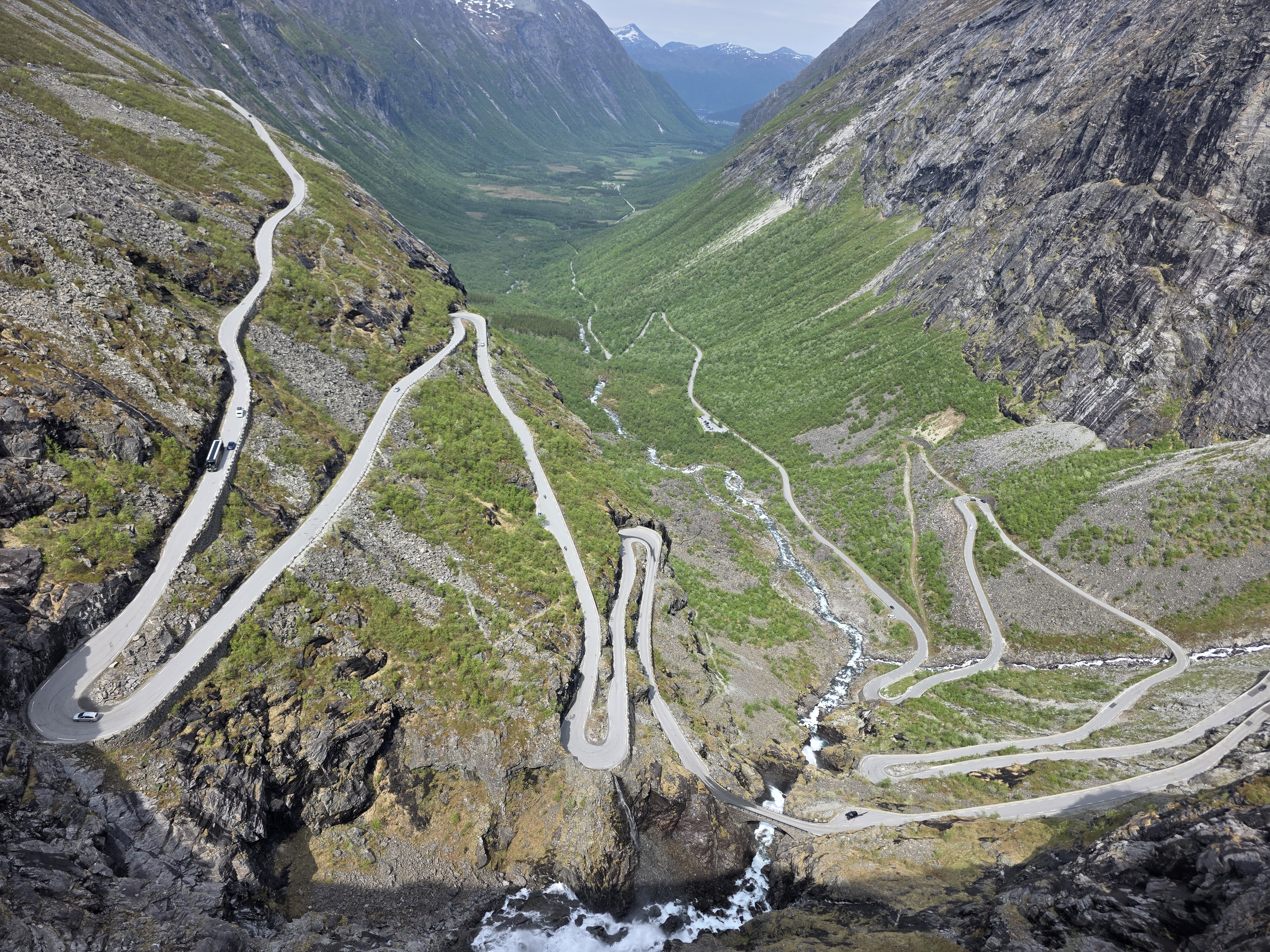
Norway’s National Scenic Routes pass through some extraordinary landscapes, with designated viewpoints, waterfalls, beaches, architectural stops, and short walks along the way.
Give yourself time to stop.
If Google Maps says a scenic route takes three hours, I wouldn’t plan on arriving exactly three hours later. The drive itself is part of the experience.

16. Download Offline Maps
Cell service is generally very good in Norway, but you shouldn’t depend entirely on having a signal when driving through remote areas or hiking.
Download Google Maps for the areas you’ll be visiting before your trip. For hiking, use an appropriate trail-navigation app and download the relevant maps for offline use.
17. Book Accommodation Early in Small Towns
Norway has plenty of hotels overall, but accommodation can be surprisingly limited in small villages and popular hiking areas.
This becomes particularly important during summer.
If your itinerary depends on sleeping in a specific place, don’t assume you’ll have dozens of hotels to choose from at the last minute. Booking early also gives you a much better chance of finding accommodation at a reasonable price.
I would prioritize booking small towns and high-demand destinations first and leave larger cities slightly more flexible.
18. Tunnels Go on for Ever
Norway has a lot of very long underground tunnels (up to 24.5 km long!), so don’t be alarmed if you are inside one for what seems like forever! They cut through mountains, the sea and all sorts of bodies of water. It’s truly fascinating!
19. Pay Attention to Parking
I encountered a lot of car parks where you have to pay for parking at arrival. This is tricky because that means you need to know how many hours you will be at a certain place in advance. Download the EasyPark app so that you can add time on the go if you need more time.
20. Don’t Overplan Your Norway Itinerary
This may be the most important of all my Norway travel tips.
Leave room in your itinerary for the unexpected.
You’ll drive past waterfalls you didn’t know existed. You’ll see a road leading toward a viewpoint and decide to investigate. You’ll pull over because the fjord suddenly looks incredible. And sometimes you’ll need to completely rearrange your plans because the mountain you intended to hike has disappeared behind a cloud.
Pick a logical route, give yourself time to enjoy it, and remember that the journey between destinations is often just as spectacular as the destinations themselves.
Final Thoughts on Traveling to Norway
Norway isn’t a particularly difficult country to travel around, but understanding a few of its quirks before you arrive can save you time, money, and frustration.
My biggest Norway travel tips are to keep your itinerary flexible, compare flying with driving for longer distances, research rental car costs carefully, and never underestimate the weather. Pack proper waterproof gear, give yourself backup days for the hikes that matter most, and don’t rush through the scenic drives just to reach your next hotel.
Most importantly, leave some room for Norway to surprise you.
See all my posts on Norwary HERE
Did you find this Norway Travel Tips post useful? Please let me know by liking/commenting below or sharing this post on social media! Thank you!!
Pin this Norway Travel Tips post for later!


2 comments
Beautiful photos and such great tips, especially about driving long distances between regions. Given that Norway has deep fjords and high mountains, it makes sense for trains, coastal boats, and domestic flights to often work faster and offer better views than driving. I’ll keep that in mind. Thanks for sharing, and have a good day 🙂 Aiva xx
Thank you! yes, flying is really simple in Norway! Almost like an air taxi haha